


To write content that is visible in AI search, also known as Generative Engine Optimisation (GEO) and Answer Engine Optimisation (AEO), focus on a digestible structure, clear and straightforward language and a question-and-answer format.
As zero-click searches continue to dominate the search landscape and show no signs of slowing, optimising for AI search is no longer optional for brands; it’s essential.
Getting blogs to appear in AI search results, however, requires an optimised approach to content. This guide covers everything you need to know about producing effective content for AI search, covering headline creation, content structure and best practices for writing.
TL;DR
- AI search requires content to be thoughtfully structured, leading with direct answers, using clear subheadings and presenting information in scannable formats.
- Blog titles and subheadings should be written as clear questions or phrases that mirror how users actually search.
- AI engines favour content that demonstrates Experience, Expertise, Authority and Trustworthiness (E-E-A-T) signals, such as original insights, real-world examples and author bios.
- Traditional Search Engine Optimisation (SEO) still matters. Optimising for AI search doesn’t replace on-page SEO and technical SEO best practices.
How to write a blog title for AI search
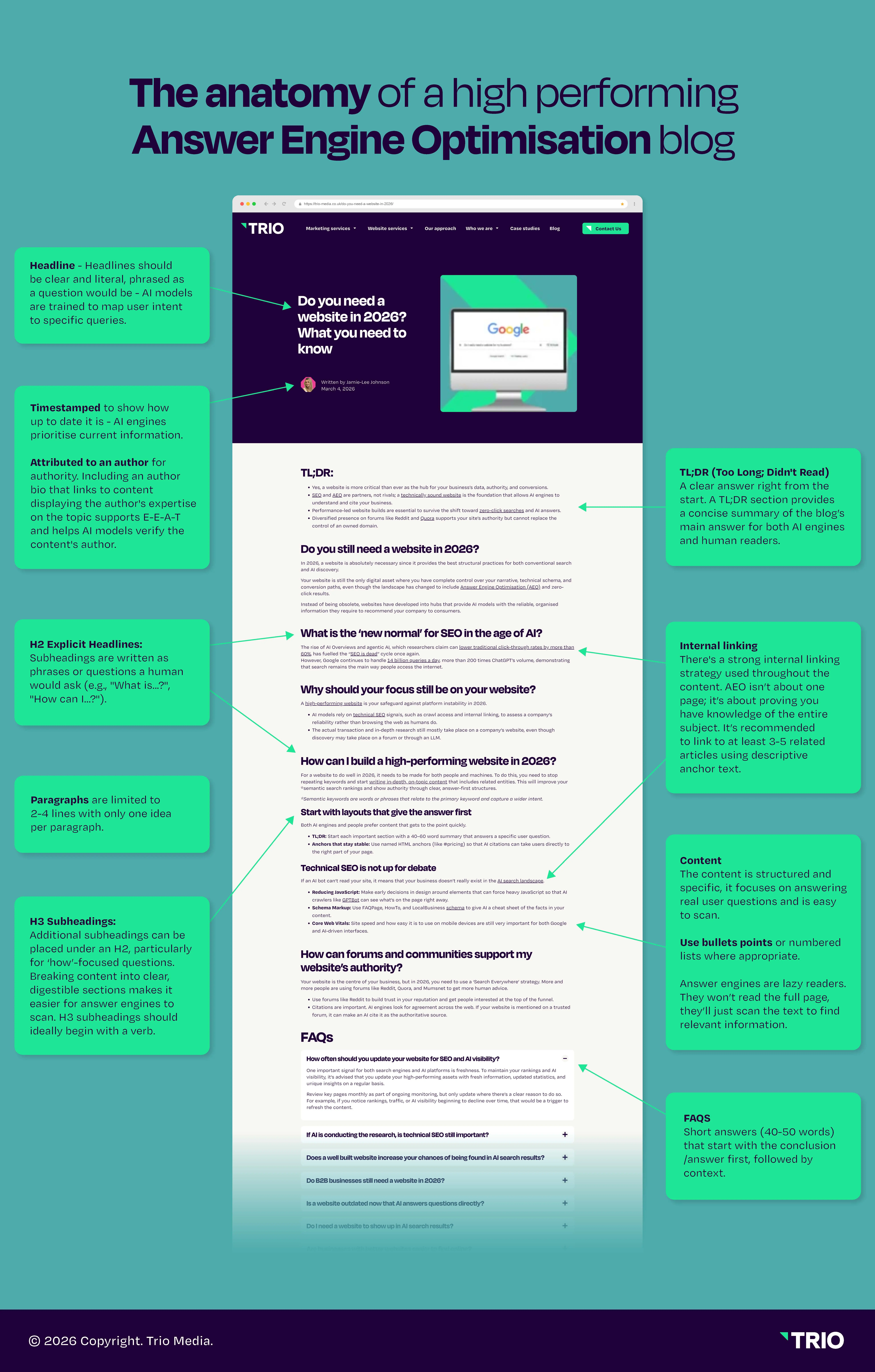
Blog titles should be clear and literal, ideally phrased as a question. AI engines are trained to map user intent to specific queries, so titles should closely relate to the topic. AI engines tend to favour content that is contextual and relevant.
For best results, start your title with an interrogative word such as how, what, why or where. For example, instead of saying ‘AI marketing strategies for better results’, write it as ‘How to create a marketing strategy for improved AI search visibility’.
How to structure body content for AI search
Blog body content should be well-structured and presented in a format that is easy for AI engines to understand.
Start with a clear introduction
A blog introduction should immediately answer the question asked in the H1. Large language models (LLMs) pay attention to the top of web pages, so the primary question should be answered as high up as possible, ideally in the first sentence.
Keep the answer short, around 40-70 words, and written clearly. A good indication that this has been achieved is if the first paragraph could stand alone as an AI-generated response.
Use clear subheadings
Subheadings should be written explicitly so they’re easy for answer engines to scan. Phrase them as questions or statements that someone would ask as a follow-up after reading the introduction. For example:
- What is [Topic]
- How to [Topic]
- 5 tips for [Topic]
- [Topic] vs [Topic]
Writing for AI search is about predicting the next thing a user will ask, so use subheadings to answer ‘what else?’, while avoiding vague headings such as ‘thoughts’ or ‘overview’.
After each subheading, immediately answer the question and include a summary sentence that can stand alone as an answer. AI engines prefer front-loaded information, so the main point should appear at the start of the paragraph, not the end. Then expand on the answer with context or examples, with one idea per paragraph.
Don’t shy away from using H3s, particularly for listicles or step-by-step content, as AI engines will scan content to look for them. If using H3s, keep them parallel in structure (for example, all starting with a verb), and nest them clearly under an H2:
H2: 5 tips for improving your AI visibility
H3: Structure your content
H3: Lead with direct answers
H3: Use schema markup
Present information in digestible formats
Structure matters a lot when writing for AI search. Rather than presenting large blocks of text, body content should vary in structure. AI engines don’t read full pages; they scan the text to extract the most relevant information. By presenting information in digestible chunks, LLMs can better interpret the page.
The best formats for structuring blog content include:
- Bullet-pointed lists – for listing reasons, benefits and features
- Numbered lists – for presenting step-by-step information
- Tables – for pricing, comparisons or advantages vs disadvantages
Include a TL;DR section
A TL;DR section provides a concise summary of the blog’s main answers for both AI engines and human readers. It helps AI engines pull content for featured snippets or direct answers, while giving users a quick answer to the primary question without needing to read the full article.
Place the TL;DR at the top of the page, beneath the short introduction and before the first H2. Aim for 2-3 bullet points or 2-4 short sentences, leading each point with a key answer or insight.
It’s best to write the TL;DR last, once the main points have been made, to ensure it matches the body content.
Add FAQs at the end
FAQs are highly effective for AI search. When content is presented in a conversational, question-answer format, AI engines can process and surface results much more easily.
LLMs favour highly specific answers, and FAQs allow you to expand your page’s main theme while addressing specific sub-queries. When writing FAQs:
- Keep answers short
- Phrase questions naturally
- Lead with a direct, answer-first structure
- Use the FAQ section to cover neighbouring topics; don’t just repeat content that’s already been discussed in the blog copy
5 tips for writing content for AI search
1. Use natural, jargon-free language
Write in a factual, neutral tone that AI engines can easily understand. Avoid using vague language and metaphors.
2. Write as a clear, natural response to the question
Answer questions directly, as you would in a conversation. The clearer and more natural the response, the easier it is for AI to scan. Remember, the answer always comes first; the context comes later.
3. Use original insights in your content
LLMs look for content that includes firsthand data, insights or commentary from industry experts. E-E-A-T is more important than ever if you want your content to be surfaced by AI engines, as they look for signals of trust and credibility.
At Trio, we work with our clients before writing begins, asking them relevant questions to gather their industry insights that we can incorporate into each blog piece.
4. Define acronyms on first use
AI engines break down content to extract answers, and an undefined acronym can lead to misinterpretation and incorrect results.
AI search content often appears in zero-click or voice results (Siri, Alexa, etc.). When a reader is listening to or quickly scanning an AI-generated answer, a standalone acronym can cause confusion.
5. List items of more than three as a bulleted list
Bulleted lists make content easier for AI engines to scan, interpret and extract information from. As opposed to long, item-heavy sentences, lists present information in a clearer, more structured format, helping AI engines identify important points more effectively.
More tips to optimise content for AI search
As you write content, keep in mind these best practices for improving visibility and clarity:
- Build a strong internal linking strategy – AI search isn’t about a single page. You need to demonstrate knowledge across the entire subject area.
- Add the relevant schema – Add FAQ schema for FAQs, How To schema for step-by-step guides and Table schema where comparison tables are used.
- Include an author bio – Adding an author bio to a blog demonstrates the writer’s expertise on the topic, supports E-E-A-T and gives AI engines clear information about who created the content.
- Add a last updated date – AI prioritises content that is fresh and relevant. If you update a blog, either refresh the publish date or add a note indicating when the content was last reviewed.
- Include examples or case studies – These further support E-E-A-T by demonstrating real-world experience and authority on a topic.
- Cite your sources – If you reference statistics or facts in your content, always link to your source. AI engines are more likely to surface pages that cite high-quality data, such as government sites, primary research or news outlets.
- Don’t forget about traditional SEO practices – Optimising for AI search doesn’t mean abandoning standard SEO practices. On-page and technical SEO remain important and require consideration.
Want to rank in AI search? Let’s discuss your content strategy.
Appearing in AI searches across Google and LLMs doesn’t happen overnight. It takes research, data analysis and a strong content strategy. If you want it done right, our team of AI search and SEO experts are here to help.
FAQs
AI-generated content won’t automatically affect your SEO, but it can over time if your strategy relies solely on thin, keyword-stuff blogs that have been mass-produced by AI.
We will always recommend a human-first approach to content. Google prioritises pages that demonstrate E-E-A-T, real-world experience and original insights, something AI-generated content can’t offer.
AI engines often provide inaccurate data, which, if published, can affect your site’s trustworthiness and credibility.
To measure the visibility of your website and brand in AI search results, you need to use specialised SEO tools, such as Semrush, typically accessed through SEO and AI search agencies like Trio.
Yes, we offer AI search services designed to help brands appear in LLMs like ChatGPT and Gemini, and in Google’s AI Overviews. Our AI search services include:
- Writing content optimised for AI search
- Making technical SEO improvements to help LLMs crawl your website
- Research and recommendations on Reddit and Quora threads suited to your brand
- Monitoring how your content performs across AI and search engines