
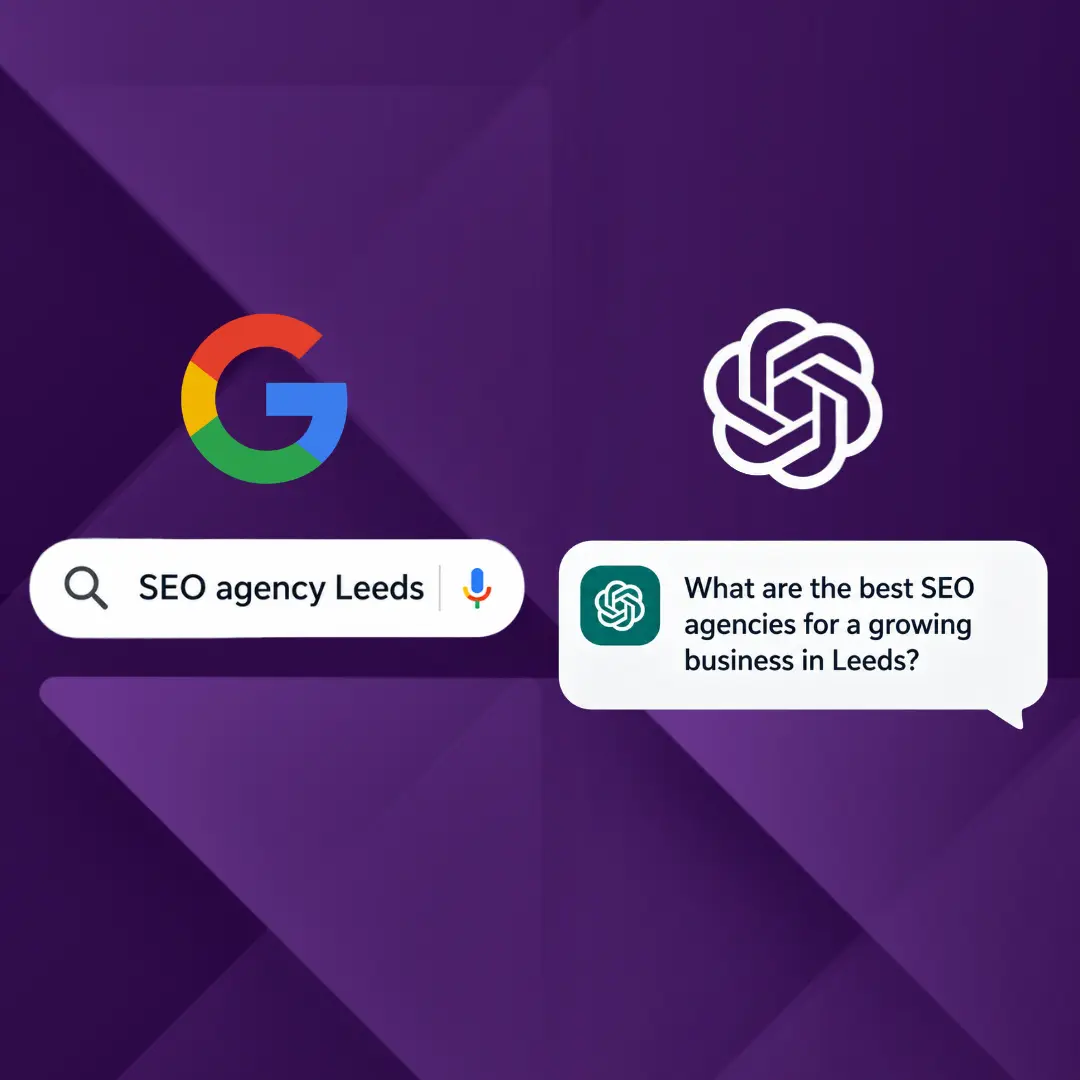
AI prompt research focuses on the conversational, long-form questions users ask AI search engines, while keyword research focuses on the terms they ask in traditional search engines. Both help inform content strategies, but combining them can improve your brand’s visibility across both traditional SEO and AI search.
TL;DR
- AI prompt research identifies conversational, long-tail questions that users ask LLMs. This research helps brands improve their AI visibility and content strategy.
- Traditional organic search remains an important source of visibility and traffic, so brands shouldn’t prioritise AI prompt research over keyword research and established SEO strategies.
- Instead, AI prompt research and keyword research should work together to form a wider AI search and SEO strategy.
- Keyword research can identify priority topics and terms, which can then inform AI prompt research to find relevant on-page content.
What is AI prompt research?
AI prompt research is the process of finding and analysing the queries users ask AI search engines such as ChatGPT and Google’s Gemini and AI Mode. These prompts are typically formulated as long-tail questions using natural language rather than direct search terms.
Once relevant prompts are identified, they can inform AI search content strategies and optimise on-page content, helping businesses improve their visibility in AI search engines.
Do I need to research AI prompts?
Yes, it is important to do AI prompt research for your brand. Now that 58% of consumers use AI tools to search for products, your brand, too, should get on board if you want to grow your visibility in Large Language Models (LLMs).
AI prompt research helps you understand how users search for queries and terms related to your brand in LLMs, which is vital for your content and wider AI search strategy. By analysing the exact queries people are asking and how they phrase them, you can work this information into your content, increasing your chances of being cited by AI engines.
How does AI prompt research differ from keyword research?
AI prompt research focuses more on conversational queries, where answers are typically decided by AI engines. Keyword research, however, targets shorter, more direct phrases and queries that deliver results based on search engine algorithms.
The difference between the two can be explored in more detail below:
| Keywords | AI prompts | |
| Length | Typically 2-5 words | Typically 5-25 words |
| Context | Short, direct phrases with minimal context | Natural-language questions rich in context |
| Output | List existing web pages in search engine results | Retrieves existing content to form new answers in an AI search engine that contains comparisons and citations |
| Goal | Increase page rankings in traditional search engines | Increase brand recommendations and citations in AI search engines |
While the method for conducting AI prompt research is similar to that for keyword research, the data analysis differs. We have access to years of historical keyword data from tools like Google Search Console, Google Trends and Semrush. This data allows us to see search volume and impressions for keywords, helping us know which ones to target and include in content.
AI prompts, however, don’t provide the same level of trend data. As they’re more conversational in nature, they’re less predictable and more difficult to track. Instead, AI prompts should be analysed within topic clusters rather than focusing on individual terms.
Tools such as Semrush offer estimated AI volume and search intent, allowing you to identify informational, commercial and transactional queries, similar to keyword research.
Is keyword research still important?
Yes, absolutely. While brands should start incorporating AI prompt research into their wider SEO strategies, keyword research shouldn’t be ignored or forgotten.
Keyword research is all about discovering what topics users are searching for in traditional search engines, such as Google, to update on-page content and improve rankings. By analysing keyword search volume, brands can determine which keywords to use in page headings, meta content and body copy to increase the chances of appearing in relevant search results.
Although consumers are increasingly using AI tools to research products, services and experiences, not all do so. Organic traffic remains important to a brand’s visibility and success, so it’s essential to maintain and build upon the keyword rankings that SEO experts have spent years developing, rather than ignoring them in favour of AI search engines.
How can keyword research and AI prompt research work together?
Keyword research and AI prompt research work best when used together. Combining traditional search volume data with more conversational, contextual queries helps your brand’s visibility across both traditional Search Engine Result Pages (SERPs) and AI search engines.
Keyword research should inform your AI prompt research. Start by identifying the keywords you want to rank for or are already ranking for, then explore the conversational-style questions that users are asking AI that include those search terms.
Use these questions to write on-page content across key service pages, blogs and FAQs. Question-led headings can be effective for getting your content cited by AI search engines, especially when followed by a clear, direct answer. This approach allows you to incorporate both AI prompts and relevant keywords in key content areas across your website.
At Trio, this is the approach we take with every piece of content we write. As an SEO agency, keyword research is central to our processes. We identify the key terms we want to target before researching relevant AI prompts to shape the content and FAQs around them.
Improve your AI search strategy with Trio
With more consumers using AI tools to research brands, you can’t afford not to be optimising your visibility in this area. However, you also can’t afford to ignore your rankings in traditional search engines.
At Trio, we believe that SEO and AEO firmly go hand in hand. Each complements the other, and both need to be part of your wider content strategy. Let us review your organic and AI search visibility and build a strategy designed to get your brand found and cited across all search engines.
FAQs
An AI prompt is a question, instruction or topic you give an AI engine to generate a response or perform a task. The more context you provide within your prompt, the more detailed and relevant the response will be.
AI search engines provide direct, conversational answers to search queries, whereas traditional search engines provide a list of search results. Users have to click through search results to find the answer they need, whereas AI engines provide an answer immediately in a conversational tone.
If you’re researching a new product or service, AI search engines will summarise different recommendations and provide comparisons to help you make a decision.
Brands should research questions and prompts users are likely to ask AI tools when researching a new product or service to understand context and intent. Questions to look for include:
- Informational questions: “What product do I need for…”
- Comparison questions: “What’s the difference between X and Y?”
- Recommendation questions: “What are the best products for…”
- Purchase-intent questions: “Which is best for a small business?”
You can measure the effectiveness of AI prompts by monitoring how often your brand is mentioned or cited within AI answers. SEO tools such as Semrush can help track AI visibility, while Google Search Console provides insights into AI search performance, and GA4 can help identify traffic from AI platforms.